The global automotive parking sensor market has undergone massive changes over the last decade. Once an option reserved strictly for premium luxury sedans, intelligent parking sensor systems have transitioned to standard, regulated safety equipment across light passenger, commercial transport, and heavy-duty industrial vehicles. Driven by tightening municipal safety mandates, rapid urbanization, and the integration of Advanced Driver Assistance Systems (ADAS), the market demand for robust obstacle detection technologies is climbing at a compound annual growth rate (CAGR) of over 6.8%.
Currently, manufacturers and tier-1 suppliers design systems that withstand harsh environmental criteria. Industrial and commercial parking assistance is no longer just about avoiding minor cosmetic paint scrapes; it is about preventing fatal work-site accidents and protecting investments in heavy utility machinery. From a macro perspectives, automotive regulators globally—such as the European New Car Assessment Programme (Euro NCAP) and the National Highway Traffic Safety Administration (NHTSA) in the United States—have established protocols that implicitly require multi-directional sensing arrays, cementing the position of parking sensor systems as critical safety hardware.
To source effectively, global procurement directors must understand the technical characteristics of the primary sensors deployed in modern obstacle detection and autonomous parking ecosystems. Below is a structured analysis of the primary sensor architectures manufactured by leading global suppliers.
| Technology Type | Operational Frequency / Bandwidth | Detection Range | Primary Industrial Advantages | Vulnerabilities & Limitations |
|---|---|---|---|---|
| Ultrasonic Sensor Systems | 40 kHz – 58 kHz | 0.1m to 4.5m | Highly cost-effective; immune to light and targets' color; compact design. | Impaired by heavy wind, physical mud accumulation, or sound-absorbing textiles. |
| Millimeter Wave Radar (mmWave) | 24 GHz / 77 GHz / 79 GHz | 0.2m to 25m+ | Functions flawlessly in rain, snow, fog, and total darkness; longer range capability. | Higher initial unit cost; complex signal processing needed for near-field objects. |
| Vision-Based Camera Fusion | Optical Spectrum | Visual line of sight | Enables absolute object classification (e.g., distinguishing a pedestrian from a post). | Severely degrades in low-light, direct sun glare, or when lens is covered by dirt. |
| Solid-State LiDAR | 905 nm / 1550 nm | 0.1m to 100m+ | Generates hyper-accurate 3D point cloud maps of the vehicle's immediate surroundings. | Prohibitively expensive for standard passenger cars; computationally intensive. |
The requirements for parking sensors change dramatically depending on the commercial environment and geographical location. Modern B2B developers must adapt sensor arrays to match these unique structural needs.
In densely populated metropolitan zones (e.g., Tokyo, London, Shanghai), tight street layouts and compact parking spots require ultra-low-latency near-field sensing. Ultrasonic sensors optimized with a detection resolution of less than 10 centimeters are preferred to avoid low-profile curbs and active pedestrians.
For mining operations, large hauling rigs, and cargo-handling machinery, standard sensors quickly fail due to high vibration levels and abrasive dust. Suppliers develop specialized IP69K-rated sensors with heavy-duty cast alloy enclosures, using ruggedized wire harnesses to prevent signal failure under massive vibration.
Operating in sub-zero regions like Northern Europe or North America requires sensors designed with integrated heating elements. These elements prevent ice buildup over the transducer face, which can block signals and trigger false hazard alerts.
Information Gain Insight: The modern frontier of proximity sensing lies in the transition from raw "echo detection" to "data-fused scene reconstruction." High-tier systems now process both ultrasonic sound pulses and visual camera feeds simultaneously, using a single system-on-chip (SoC) processor to avoid the weaknesses of individual sensor types.
Looking ahead to the next five years, parking sensor systems are moving toward full integration with Level 3 and Level 4 autonomous vehicle networks. Standalone parking buzzers are being replaced by high-speed Ethernet-connected sensor networks. Key developments to watch include:
Finding a reliable supply chain partner requires evaluating both their engineering capabilities and their manufacturing infrastructure. A key example is Suzhou Vivi Auto Accessories Co., Ltd., a specialized Tier-2 automotive accessories manufacturer with over 10 years of experience in high-durability pickup truck components.
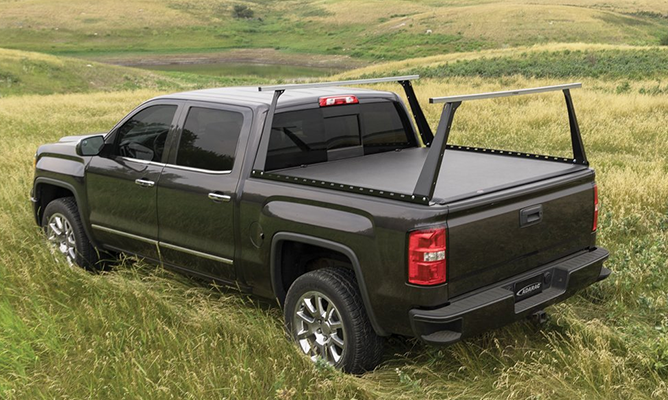
Specializing in the production of pickup auto parts for more than 10 years, Suzhou Vivi Auto Accessories Co., Ltd. is a limited company integrating research, development, production, and sales. The company's portfolio features manual tonneau covers, tri-fold tonneau covers, electric tonneau covers, power tailgate locks, and luggage racks. Suzhou Vivi is proud to be the first manufacturer in China to directly produce manual roller lid covers for pickup trucks.
Enterprise’s Aspiration: The company adheres to the principle of quality first and customer first, and is committed to developing and manufacturing first-class products. We look forward to being your trusted partner and finding more win-win distributors around the world. Welcome to visit our factory. Thank you.

Accept ODM & OEM

Fast Delivery Time

After-sales Service
Through rigorous production standards and modern machinery, the facility ensures consistent quality across all product groups. Below are images of the production lines and manufacturing floors:


True automotive-grade sensor manufacturing targets less than 10 DPPM (Defective Parts Per Million). Achieving this rate requires strict adherence to AEC-Q100 qualifications for integrated circuits and automated validation at the end of the production line.
Crosstalk is mitigated using time-division multiple access (TDMA) firing sequences, along with pseudo-random frequency shifts for each acoustic signal pulse. This ensures the receiver controller only processes echoes originating from its own transmitter.
Yes. Excessively thick paint layers or heavy metal flake additives in the paint can dampen acoustic vibrations, leading to reduced sensitivity or false alerts. Sensor manufacturers recommend maintaining paint thicknesses under 150 microns over the sensor head.
Compliance requires comprehensive Failure Modes and Effects Analysis (FMEA), high-temperature operational life testing (HTOL), thermal cycling across temperatures from -40°C to +85°C, and electrostatic discharge (ESD) testing.
 Vivi Auto Accessories