Explore our foundational automotive components, electronics, and accessories engineered to global OEM standards.
How space optimization and cabin acoustics are reshaping the global automotive aftermarket.
Within modern automotive interior design, space optimization remains a critical challenge. For system integrators and aftermarket distributors, finding the balance between rich low-frequency acoustic performance and space preservation has led to the rapid rise of under seat subwoofers. Designed to sit within the unused clearance zone underneath driver or passenger seats, these systems deliver deep, omnidirectional bass without taking up trunk space.
Historically, subwoofers required large, heavy, ported wooden enclosures housed in the trunk. While effective for displacement, this design sacrificed utility—a compromise modern consumers are increasingly unwilling to make. Under seat subwoofers solve this issue by utilizing shallow-mount woofer designs, high-efficiency Class D amplifiers, and custom-tuned passive radiators. Combined, these components deliver excellent sound pressure levels (SPL) from thin, low-profile enclosures.
Unlike standard subwoofers, under seat models must balance thermal limits and vibration control inside a highly restricted, sealed aluminum enclosure. This requires precise voice coil design and advanced thermal modeling to prevent performance drop-offs or component failure under continuous load.
Enclosures are usually under 3 inches tall, designed using 3D spatial models to ensure compatibility with various seat adjustment tracks and wiring harnesses.
Using Class D amplification keeps power conversion efficiency above 85%, minimizing heat generation in carpeted, low-airflow environments.
Integrated Digital Signal Processors (DSP) adjust equalization dynamically based on volume, maintaining clean bass reproduction and protecting the cone from over-excursion.
B2B indicators, market demand, and key engineering parameters for bulk procurement.
The global automotive audio market is expanding rapidly, driven by the growth of electric vehicles (EVs) and smart cabins. EVs require lightweight, energy-efficient audio components to protect battery range. This has made lightweight under seat subwoofers an attractive option for original equipment manufacturers (OEMs) and tier-1 system suppliers.
For sourcing managers and wholesale buyers, evaluating a factory's technical capabilities requires looking at standardized acoustic and manufacturing metrics. The table below outlines the industry standards for high-performance under seat subwoofer systems:
| Performance Dimension | Standard Specification Range | Acoustic Engineering Relevance |
|---|---|---|
| Driver Size Range | 6.5 inches, 8 inches, to 10 inches | Determines air displacement capacity and the lower limit of frequency response. |
| Enclosure Construction | Die-cast aluminum, reinforced ABS polymer | Minimizes cabinet resonance and handles mechanical stress under the seat. |
| RMS Power Rating | 100W - 250W Continuous RMS | Indicates long-term sustainable power handling without thermal compression. |
| Total Harmonic Distortion (THD) | < 0.4% at rated RMS | Ensures clear, accurate bass reproduction without artificial acoustic artifacts. |
| Input Phase Adjustment | 0° to 180° variable switch | Aligns phase with main cabin speakers to prevent frequency cancellation. |
| Thermal Shutoff Threshold | Automatic protection at ≥ 85°C (185°F) | Protects the voice coil and PCB from damage in restricted-airflow locations. |
Additionally, modern manufacturing setups must be highly flexible. Suppliers need to offer custom tooling, variable PCB layouts for custom impedance ratings (e.g., 2-ohm vs 4-ohm systems), and multiple input configurations (high-level speaker inputs for factory head units and low-level RCA inputs for aftermarket systems).
Combining production capabilities, design expertise, and strict quality control for pickup truck and automotive components.
Suzhou Vivi Auto Accessories Co., Ltd. is an established manufacturer specializing in pickup truck auto parts and premium automotive accessories. With over 10 years of experience, the company operates as a joint research, development, production, and sales hub.
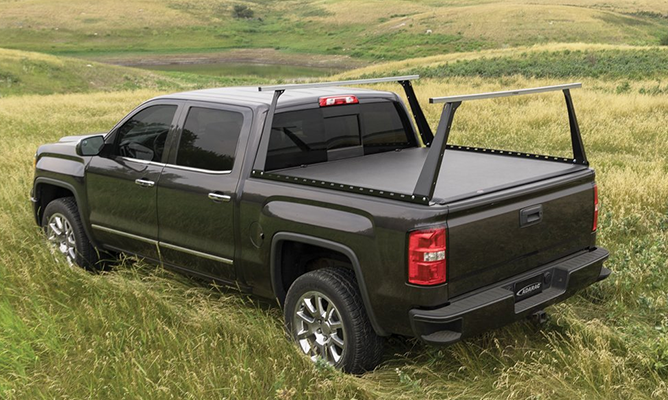
Our comprehensive production facility specializes in a range of auto accessories. The catalog features manual, tri-fold, and electric tonneau covers, power tailgate locks, and luggage racks. As the first company in China to directly manufacture manual roller lid covers for pickup trucks, Suzhou Vivi Auto Accessories Co., Ltd has set a high standard for manufacturing precision, supply chain reliability, and product durability.
Operating under the philosophy of "quality first, customer first," we design and manufacture premium components built for durability and long-term reliability. We welcome distributors and commercial partners worldwide to visit our factory and build win-win partnerships.

Accept ODM & OEM Services

Fast and Secure Delivery Time

Comprehensive After-Sales Support


Meeting international quality and safety metrics for seamless global distribution.
Exporting automotive electronics and high-power audio components requires strict adherence to international safety and compatibility standards. To enter markets in North America, Europe, and Asia-Pacific, manufacturers must secure several key certifications:
Essential for entering European Union markets. CE marks verify safety and electromagnetic compatibility, while RoHS confirms that no hazardous substances are used in construction.
The standard automotive quality management certification. This standard guarantees traceablity, strict process control, and defect prevention throughout the manufacturing line.
Required for electromagnetic compatibility. E-Mark certification ensures the subwoofer does not interfere with the vehicle's engine management units, CAN bus networks, or safety sensors.
To verify these standards, top-tier factories use advanced testing protocols before shipment. This includes swept-sine acoustic profiling to detect unit-to-unit variance, thermal chamber stress testing to simulate extreme summer cabin temperatures (reaching up to 85°C), and multi-axis vibration tables to simulate years of road travel.
Acoustic design innovations set to define the next generation of under seat subwoofers.
The automotive audio landscape is shifting from simple analog reinforcement toward smart, digitally-tuned sound systems. Key technology trends shaping the future of under seat subwoofers include:
By keeping pace with these design developments, B2B importers and OEM suppliers can future-proof their product lines, positioning themselves to supply next-generation electric and autonomous vehicles.
Technical, commercial, and supply chain questions answered by industry experts.
Explore our full range of durable vehicle upgrades, specialized electronics, and replacement parts.
 Vivi Auto Accessories