
The modern automotive aftermarket is experiencing a paradigm shift. Traditional radios and basic single-DIN/double-DIN head units have yielded to intelligent, cloud-connected Android Car Stereo Systems. As automotive architectures become more software-defined, consumer demand for features such as real-time navigation, AI voice controls, high-fidelity digital signal processing (DSP), and advanced CAN-bus vehicle telemetry has surged.
For global B2B buyers—importers, national distributors, and Tier-1 automotive accessory brands—navigating the global exporter ecosystem requires a granular understanding of both software stacks and hardware supply lines. Modern IVI (In-Vehicle Infotainment) devices are no longer standalone systems; they are complex hubs that bridge human-machine interfaces (HMI) with the vehicle's controller area network (CAN).
Importers must look beyond raw aesthetic design and address structural compliance and hardware stability. Top-tier exporters distinguish themselves by offering solutions built on robust system-on-chips (SoCs) such as the UIS7862 or Qualcomm Snapdragon automotive platforms. These high-performing chips guarantee the low boot-up times (Fast Boot) and multi-tasking capabilities expected by end-users.
A reliable Android head unit is defined by its core hardware architecture. When evaluating exporters, purchasing agents should request detailed component blueprints. Top manufacturers offer products featuring independent audio processors, high-performance tuners, and dynamic heat dissipation.
Octa-Core architectures (typically 2xCortex-A75 + 6xCortex-A55 at 1.8GHz to 2.0GHz) configured with LPDDR4/4X RAM and high-speed eMMC storage, minimizing interface lag and application load times.
Integrated professional DSP chips (like the ROHM BU32107 or ADAU1701) that support multi-band parametric EQ, time alignment, and sub-bass filtering, coupled with high-fidelity output chips like TDA7851.
Simultaneous support for global 4G bands, dual-band Wi-Fi, and Bluetooth 5.0, enabling stable operation of wireless Apple CarPlay and Android Auto.
Furthermore, display technology has transitioned from resistive screens to capacitive IPS and QLED panels. A high-contrast display with a resolution of 1280x720 or 2000x1200 pixels is essential to ensure readability in bright sunlight. Top-tier exporters apply OCA (Optically Clear Adhesive) full-lamination technology to eliminate glare and moisture buildup.
The global dominance of Chinese automotive accessory exporters is not accidental. It is the result of deep industrial clustering, logistics infrastructure, and unparalleled engineering speed. From PCB assembly (SMT lines) to final system integration and mechanical housing fabrication, the coordination of production cycles in industrial zones like Jiangsu and Guangdong guarantees prompt turnaround times.
A prime example of this industrial capability is Suzhou Vivi Auto Accessories Co., Ltd. With over 10 years of manufacturing experience, Vivi Auto Accessories stands as an expert in integrated automotive upgrades, offering a wide array of high-quality products ranging from premium mechanical hardware to complex interior solutions.
Combining premium mechanical integrity with precision manufacturing to deliver global OEM and ODM solutions.
Suzhou Vivi Auto Accessories Co., Ltd is a specialized manufacturer of auto parts with a limited-liability company structure spanning over a decade of operation. As a comprehensive developer and supplier, the company integrates research and development, manufacturing, and distribution of premium pickup truck accessories—including manual tonneau covers, tri-fold tonneau covers, electric tonneau covers, power tailgate locks, and heavy-duty luggage racks. Notably, Suzhou Vivi Auto Accessories Co., Ltd is the pioneer manufacturer to directly produce manual roller lid covers for pickup trucks in mainland China.
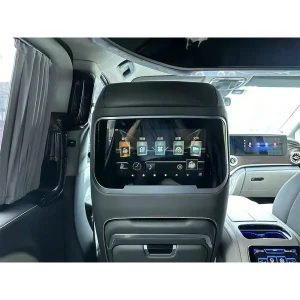
This level of structural engineering expertise complements the installation of high-end cabin electronics like Android Car Stereo systems, rear-seat entertainment panels, and electronic integration products, providing distributors worldwide with a comprehensive procurement partner.


Adhering strictly to the core principle of "quality first and customer first", Vivi Auto Accessories is dedicated to developing and manufacturing first-class products. By maintaining strict control over steel tolerances, electrical wiring, and assembly quality, the company provides a reliable supply source for international distributors seeking win-win partnerships.
An Android car stereo is only as good as its regional configuration. Exporters targeting global markets must account for local RF conditions, language variations, and mapping configurations. This localization spans several technical domains:
Working with an exporter that proactively implements these localized firmware variations prevents post-sale firmware updates, reducing product returns and support inquiries.
How top exporters guarantee consistent production standards.
All critical chips, screens, and capacitors undergo automated parameter testing and baseline checks before hitting the SMT assembly line.
Pre-assembly PCBA passes through multi-point camera inspections checking for component alignment, soldering bridges, and contact reliability.
Assembled Android stereos run benchmark loops inside temperature-controlled rooms for 4 to 8 hours to identify premature component failure.
The future of Android Car Stereos is closely tied to artificial intelligence and connected car tech. Emerging system updates are set to integrate native LLMs (Large Language Models), enabling conversational interactions that manage climate control, entertainment, and safety systems.
Additionally, multi-screen setups are becoming standard. Modern exporters are designing main head units that act as central processing hubs, transmitting independent video streams to rear-seat displays and instrument clusters. This integration provides a unified infotainment experience across all seating positions.


 Vivi Auto Accessories