Personalizing a vehicle in 2026 is no longer limited to choosing flashy wheels or changing the paint. Drivers can improve comfort, appearance, organization, and daily usability with carefully selected accessories. This guide explains how to personalize a car with accessories while keeping safety, compatibility, and long-term value in view.
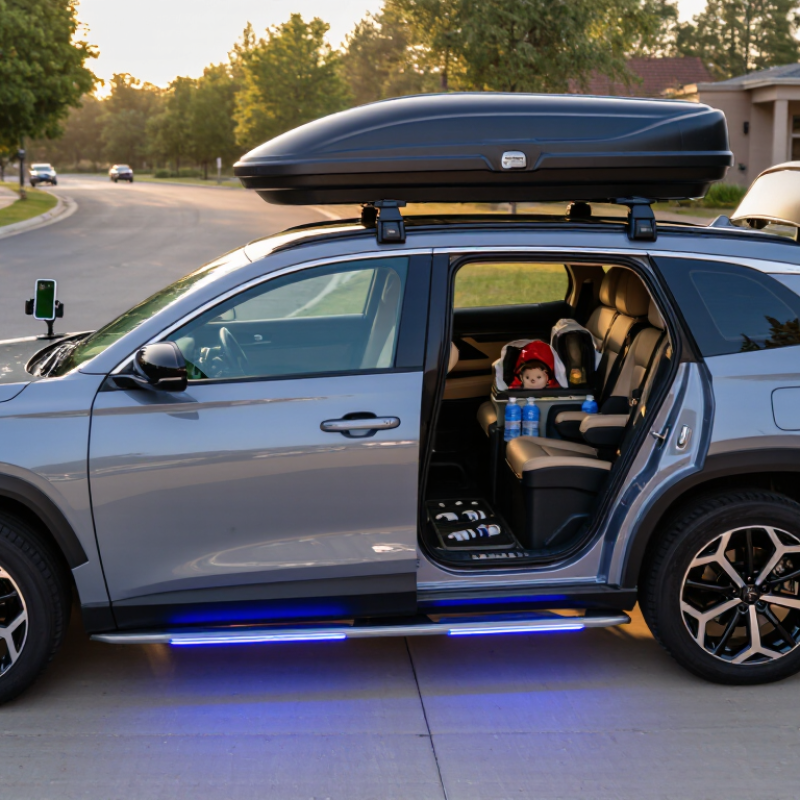
Modern options include wireless charging mounts, modular storage, custom floor protection, ambient lighting, roof carriers, seat organizers, and refined exterior details. However, attractive designs can hide practical problems. A poorly fitted phone mount may block visibility, while low-quality lighting can distract the driver at night. Small decisions matter.
Reliable personalization begins with the vehicle’s exact model, trim, year, and factory equipment. Professional installers and manufacturer specifications provide useful guidance, especially for electrical accessories, towing equipment, and roof systems. Legal requirements also differ by location, so lighting colors, window coverings, plate frames, and exterior modifications should be checked locally. Never sacrifice airbag operation or seat-belt access for appearance.
A sensible plan starts with daily needs. Do you carry sports equipment, children, pets, or work tools? Your answer should shape every purchase. Neutral accessories often age better, but a bold detail can make the cabin feel personal. I have learned that adding too much at once usually creates clutter. Better results come from testing one accessory, checking its durability, and reconsidering what does not work. Personal style matters, but a personalized car should still feel safe, practical, and dependable.
Personalizing a car in 2026 should begin with a clear purpose, not a shopping list. Do you need easier loading, better cabin comfort, or a sharper visual identity? SEMA’s U.S. automotive specialty-equipment market estimate reached $52.3 billion, showing strong demand for practical and expressive upgrades. The figure also signals risk: a large market can encourage unnecessary spending. Write three goals, then rank them by daily value.
Set a fixed budget before choosing accessories. Reserve about 15% for installation, wiring, fasteners, or unexpected adjustments. A roof organizer may improve weekend travel, while durable floor protection handles muddy commutes. Measure cargo space first. Check weight limits, visibility, lighting, and sensor clearance. Professional installation records can support safer decisions and future resale discussions. I have found that attractive parts often disappoint when they create noise, glare, or cleaning problems. That trade-off deserves attention.
Tips: Compare total cost, not shelf price. Keep receipts and fitment notes. Choose reversible upgrades when uncertain. Test one change for two weeks before adding another. Your first plan may be wrong. Revise it. SEMA market research can guide category choices, but personal use should guide the final purchase. A smaller upgrade that works daily may outperform an expensive appearance package. Review the budget monthly, especially after installation fees or maintenance needs appear.
Assess Your Goals and Budget Within the U.S. Specialty-Equipment Aftermarket
The U.S. specialty-equipment automotive aftermarket reached an estimated $52.3 billion in 2023. Use the market trend as context, then set a personal accessory budget according to your priorities, vehicle condition, and installation needs.
Personalization should begin with protection, not appearance. The National Highway Traffic Safety Administration recorded 40,901 traffic deaths in 2023. That figure is a serious safety baseline for every accessory decision. Choose additions that preserve clear visibility, proper restraint use, and predictable vehicle handling. Floor mats should stay secured and away from pedals. Phone mounts should not block the windshield or dashboard controls. Fit matters.
Tips: Check each accessory before driving. Confirm that airbags remain unobstructed. Avoid loose dashboard objects, oversized decorations, and poorly mounted exterior parts. Test visibility at night and during rain. Read installation instructions carefully. If an item shifts, rattles, or distracts you, remove it. Keep it simple.
A safer personalized interior may include organized storage, reflective emergency equipment, and adjustable lighting that does not glare. Exterior changes also require restraint. Added weight can affect braking, steering, and fuel use. Decorative lighting may distract other drivers or reduce visibility. Local requirements can vary, so verify them before installation. An experienced technician can inspect mounting points and electronic connections, especially after modifications involving power. Do not assume a popular accessory is automatically safe. I have found that attractive additions often create small compromises, and those compromises are easy to underestimate. Recheck everything after a week of driving. Safety is not finished when installation ends.
Personalizing a car in 2026 should begin with compatibility, not appearance. SEMA’s 2024 Market Report valued the U.S. specialty-equipment market at about $52.65 billion in 2023. That growth reflects strong demand, but popular does not mean suitable. Check the vehicle’s model year, trim, engine, weight limits, and electrical system before buying accessories. Exterior upgrades should preserve lighting visibility, license-plate placement, tire clearance, and camera views. A roof carrier may look practical, yet incorrect loading can change handling and increase wind noise.
Interior accessories need equal care. Floor liners should lock into factory anchors and avoid the pedals. Seat covers must not interfere with side airbags. The Insurance Institute for Highway Safety repeatedly emphasizes clear sightlines and effective restraint systems, so decorative additions should never block mirrors, displays, or belt paths. Performance parts require more evidence. Confirm heat tolerance, brake clearance, suspension geometry, and calibration requirements. A louder exhaust is not automatically better. Sometimes, it only adds fatigue.
Tips: Photograph the original setup before installation. Keep receipts, fitting instructions, and load ratings. Use torque specifications from the vehicle service information. SEMA’s 2023 Future Trends report identified technology integration as a major consumer priority, making sensor compatibility especially important. Test every camera, warning light, steering control, and parking sensor afterward. Do not guess. If an accessory needs cutting, drilling, or software changes, ask a qualified technician to inspect the installation. Even careful owners can miss one connector or fastener.
| Accessory Type | Personalization Goal | Typical Vehicle Compatibility | Key Fitment Checks | Estimated Cost Range (USD) | Typical Install Time | Approx. Weight Effect | Performance or Comfort Effect | Installation Difficulty | Safety and Compliance Notes |
|---|---|---|---|---|---|---|---|---|---|
| Exterior | Roof crossbars and cargo carrier | Vehicles with raised rails, flush rails, fixed mounting points, or a compatible bare-roof kit | Roof type, maximum roof load, bar spread, carrier dimensions, hatch clearance, and dynamic load rating | $150–$900 | 1–3 hours | +10–30 kg, depending on the system | Increases cargo capacity; may increase wind noise and fuel or energy consumption | Moderate | Keep the combined carrier, accessory, and cargo weight below the vehicle’s dynamic roof-load limit. Secure cargo and recheck fasteners after the first trip. |
| Exterior | All-weather floor and cargo liners | Most passenger cars, crossovers, SUVs, and light trucks when shaped for the exact cabin | Model year, body style, seat configuration, floor anchors, pedal clearance, and cargo-floor layout | $60–$300 | 10–30 minutes | +3–8 kg | Protects carpet and cargo trim from water, mud, and debris; little effect on driving performance | Easy | Use retention clips where provided. The driver’s mat must not interfere with the accelerator, brake, clutch, or seat movement. |
| Exterior | Paint-protection film or removable protective coating | Most painted exterior panels; transparent film is commonly used on bumpers, mirrors, door edges, and loading areas | Panel shape, paint condition, sensor locations, temperature during installation, and coverage boundaries | $250–$2,500 | 2 hours–2 days | Negligible | Helps reduce damage from stone chips, light abrasion, and road debris; does not prevent major impact damage | Advanced | Do not cover lamps, cameras, radar surfaces, license plates, or required reflectors unless the material is specifically approved for that location. |
| Exterior | Window sunshades and UV-protection film | Vehicles with glass dimensions matching the selected shade or film pattern | Glass shape, legal visible-light-transmission limits, defroster lines, antenna locations, and camera or sensor areas | $30–$800 | 15 minutes–1 day | Negligible | Reduces solar heat and glare; darker film can reduce nighttime visibility | Easy Moderate | Window-tint limits differ by jurisdiction. Never obstruct the driver’s view or interfere with windshield cameras, heating elements, or emergency visibility. |
| Exterior | Lighting upgrade or auxiliary lighting | Only vehicles with compatible bulb types, approved housings, mounting points, and sufficient electrical capacity | Bulb specification, beam pattern, connector type, CAN-bus compatibility, fuse rating, and local lighting regulations | $80–$1,200 | 1–5 hours | +1–10 kg | Can improve visibility when correctly aimed; incorrect light output can create glare for other road users | Advanced | Use road-legal lamps with the correct beam pattern. Do not exceed circuit capacity or mount lights where they obscure required signals or plates. |
| Interior | Seat covers and ergonomic cushions | Most seats when the cover design matches seat shape, airbags, head restraints, and seat controls | Side-airbag seams, seatbelt openings, heated or ventilated seats, occupancy sensors, and power-seat travel | $50–$600 | 30 minutes–2 hours | +2–12 kg | Changes cabin appearance and may improve comfort; thick materials can retain heat | Easy Moderate | Use only covers designed for seats with side airbags. Do not block seatbelt buckles, occupancy sensors, or seat controls. |
| Interior | Dash camera and parking camera system | Most vehicles with a 12-volt accessory circuit or compatible USB power source | Windshield camera view, fuse type, parking-mode power requirements, cable routing, storage capacity, and ADAS camera location | $70–$500 | 1–3 hours | +0.2–2 kg | Provides driving evidence and parking monitoring; adds minimal cabin weight | Moderate | Keep the camera outside the driver’s primary field of vision and away from forward-facing safety sensors. Use a correctly fused power connection. |
| Interior | Infotainment and phone-mount solution | Vehicles with a compatible dashboard, vent, console, USB port, or audio interface | Mount stability, screen visibility, cable routing, wireless compatibility, steering-wheel controls, and charging output | $25–$900 | 15 minutes–4 hours | +0.2–4 kg | Improves navigation and connectivity; poorly positioned devices can distract the driver | Easy Advanced | Place displays within permitted viewing areas and avoid blocking airbags, vents, controls, or the driver’s sight lines. |
| Interior | Sound-deadening panels and insulation | Most vehicles, provided panels can be removed without blocking wiring, drains, airbags, or service access | Panel attachment points, material thickness, moisture exposure, airbag paths, and added door or hatch weight | $150–$1,500 | 4–20 hours | +15–45 kg | Can reduce road and panel noise; added mass may slightly affect acceleration and energy use | Advanced | Do not cover wiring, drainage channels, airbag modules, seatbelt retractors, or high-voltage components in electrified vehicles. |
| Performance | High-performance tires | Vehicles using the correct tire size, load index, speed rating, and approved wheel diameter | Overall diameter, width, load index, speed rating, clearance at full steering lock, pressure specification, and seasonal conditions | $400–$1,600 per set | 1–2 hours | Varies; commonly +2–8 kg per set | May improve dry-road grip and steering response; can increase noise, wear, and wet-weather risk if unsuitable | Moderate | Never fit tires below the vehicle’s required load index or speed rating. Check pressure after installation and follow the correct break-in procedure. |
| Performance | Lightweight wheels | Vehicles with the correct bolt pattern, center bore, offset, diameter, width, and brake clearance | Hub fit, lug or bolt seat type, offset, brake-caliper clearance, tire compatibility, and load rating | $700–$3,000 per set | 2–4 hours | Can reduce unsprung mass by approximately 2–12 kg per set | May sharpen steering response and ride control; incorrect fitment can cause vibration or component damage | Advanced | Use wheels with an adequate load rating and compatible fasteners. Torque fasteners to the vehicle’s specified value and recheck them after driving. |
| Performance | Brake-pad and rotor upgrade | Vehicles with brake hardware and dimensions matching the exact axle and trim configuration | Rotor diameter and thickness, caliper clearance, pad shape, electronic parking brake, ABS compatibility, and axle application | $300–$2,500 per axle | 2–6 hours | Usually +0–15 kg per axle | Can improve heat resistance and braking consistency; friction characteristics may change pedal feel and dust levels | Advanced | Brake work affects a critical safety system. Install matching components by axle, inspect brake lines, and complete the required bedding procedure. |
| Performance | Suspension spring, damper, or handling kit | Vehicles with an application-specific kit for the exact platform, axle load, and suspension layout | Ride height, spring rate, damper travel, alignment range, electronic damping, tire clearance, and payload requirements | $600–$3,500 | 4–12 hours | Varies; commonly +0–20 kg | Can change cornering response and ride height; excessive lowering may reduce ground clearance and suspension travel | Advanced | Obtain a full alignment after installation. Check headlamp aim, steering clearance, bump-stop travel, and local minimum-ground-clearance rules. |
| Performance | Air-intake or filtration upgrade | Internal-combustion vehicles with matching engine, intake routing, sensor fittings, and emissions configuration | Engine code, mass-airflow or pressure sensors, heat shielding, water exposure, ECU calibration, and emissions compliance | $100–$1,200 | 1–4 hours | Usually -1 to +4 kg | May alter intake sound and airflow; performance benefits depend on calibration and engine design | Moderate | Use a sealed intake where water ingestion is possible. Do not remove emissions equipment or use parts that are not legal for road use in the vehicle’s jurisdiction. |
| Performance | Trailer hitch and wiring module | Vehicles with an approved towing capacity and a body-specific hitch mounting structure | Towing rating, tongue-weight limit, receiver size, crash structure, wiring type, cooling capacity, and parking-sensor behavior | $300–$1,500 | 3–8 hours | +20–45 kg | Adds towing or bicycle-carrying capability; may reduce departure angle and ground clearance | Advanced | Stay within the lower of the vehicle, hitch, and trailer ratings. Use the correct wiring module and verify that lamps and stability systems operate correctly. |
| Cost ranges are general 2026 planning estimates in U.S. dollars and vary by vehicle, material, labor rate, and installation quality. Before purchasing, confirm the vehicle identification number, model year, body style, engine or motor configuration, drivetrain, axle load, and local road regulations. | |||||||||
Personalizing a Car With Accessories in 2026
Connected accessories should solve a driving problem, not create another screen. I begin with a phone mount, a compact wireless charger, and a voice-controlled tire-pressure monitor. These upgrades keep cables away from the gear selector and make warnings easier to notice. J.D. Power’s 2024 U.S. Initial Quality Study recorded 49.1 infotainment problems per 100 vehicles. That figure makes installation quality worth checking. A loose adapter can cause delays, signal drops, or distracting alerts.
Before buying a connected display, I test pairing, daylight readability, and steering-wheel compatibility. I also check whether the accessory receives security updates. The 2024 J.D. Power U.S. Tech Experience Index found that many drivers still struggle with complicated vehicle technology. More functions do not always mean better usability. Keep controls simple. My first setup looked impressive, but I rarely used half the features. That was poor planning. A basic rear-seat camera, emergency battery pack, and offline navigation option may offer more daily value. I record the installation date and software version, then inspect the mount after rough roads and temperature changes. Product claims can sound precise, yet real-world performance depends on the vehicle’s electrical system, phone model, and signal coverage. Data permissions deserve equal attention. Disable unnecessary location access, use strong account credentials, and avoid accessories that demand excessive personal information.
Personalizing a car in 2026 starts with verification, not decoration. SEMA’s 2024 market report valued the U.S. specialty-equipment sector at about $52.3 billion in 2023. That growth creates more choices, but fitment mistakes remain expensive. S&P Global Mobility reported an average U.S. vehicle age of 12.6 years in 2024. Older cars may have revised trim, sensors, or undocumented repairs. Check the exact year, body style, engine, mounting points, load rating, and electrical connectors before ordering.
Installation quality matters. Park on a level surface, photograph existing wiring, and test every light before closing panels. Keep clearance around brakes, tires, cameras, airbags, and exhaust heat. A torque wrench is not excessive; loose fasteners can turn a small upgrade into a dangerous failure. I once underestimated a three-millimeter gap. It looked harmless, then rubbed during steering. Measure twice. A qualified installer should provide a written work record, part details, and any calibration results.
Read the warranty before cutting, drilling, or rewiring. Some coverage depends on approved installation, maintenance records, or unchanged electrical systems. Keep receipts and photographs. Confirm local rules for lighting color, window coverage, plate visibility, exterior width, ride height, noise, and inspection approval. Requirements can differ between neighboring areas. The safest choice is not always the most attractive one. Verify with the transport authority or inspection office, because online forum advice may be outdated.
Check the vehicle’s exact year, trim, engine, mounting points, and load limits. Confirm tire clearance, lighting visibility, plate placement, and camera views. Looks can mislead.
Follow the vehicle’s weight rating and the carrier’s loading instructions. Distribute luggage evenly and secure every item tightly. Incorrect loading can affect handling and increase wind noise.
Floor liners should lock into factory anchors without touching the pedals. Seat covers must not block side airbags or belt paths. Keep mirrors and displays clear.
Test every light, camera, parking sensor, warning signal, and steering control. Check for loose connectors after driving on rough roads. Do not guess.
Choose accessories that solve clear problems, such as cable clutter or low tire pressure. Test pairing, screen readability, controls, and phone compatibility before regular use. More features may create more distraction.
Disable unnecessary location access and use strong account credentials. Check update support and review requested permissions carefully. Convenience has limits.
Confirm heat tolerance, brake clearance, suspension geometry, and calibration requirements. A louder exhaust may increase fatigue without improving driving. Noise is not performance.
Ask for assistance when installation requires cutting, drilling, rewiring, or software changes. Request written records, torque details, part information, and calibration results. Even careful owners miss one fastener.
How to personalize a car with accessories begins with clear goals, a realistic budget, and a plan for how each upgrade will improve appearance, comfort, convenience, or driving performance. With the U.S. aftermarket market valued at approximately $52.3 billion, drivers have many options, but safety should remain the priority. Use the 2023 baseline of 40,901 road fatalities as a reminder to avoid modifications that reduce visibility, control, or vehicle reliability.
Choose exterior, interior, and performance accessories that match the vehicle’s specifications and intended use. Connected features can improve convenience, but their quality and usability should be evaluated carefully before installation. Always confirm fitment, installation procedures, warranty effects, and local requirements. Professional installation may be worthwhile for electrical, structural, or performance-related upgrades. A successful personalization project balances style, function, safety, and long-term dependability rather than focusing only on appearance.

Vivi Auto Accessories