Car accessories are easy to overlook until a loose charging cable tangles with a seat belt or a damp floor mat leaves a musty smell. China’s varied climates make storage choices matter: summer heat, coastal humidity, dust, and limited parking space can all affect what stays in a vehicle. Heat matters. A 2018 study published in Temperature examined 16 parked vehicles and found that cabin temperatures rose by about 40°F in one hour, with most of that increase occurring within 30 minutes. The result is a useful warning, not a universal prediction for every car or accessory.
Knowing How to store car accessories when not in use starts with a simple check: what needs to stay dry, what should be kept out of direct sun, and what must remain easy to reach? A small lidded container can keep a tire-pressure gauge and gloves from sliding around. A breathable bag may suit a dry cloth better than a sealed plastic pouch, especially after cleaning. Small items wander. That is not enough. Storage advice also needs limits: manufacturers’ care instructions should take priority, and heat-sensitive electronics should not be left in a hot cabin when avoidable. This guide introduces ten practical ways to organize accessories in the trunk, glove compartment, and home between trips. Some solutions will not fit every vehicle. That distinction is easy to miss. A tidy trunk is useful, but safe placement and dry, clean storage matter more than appearance.
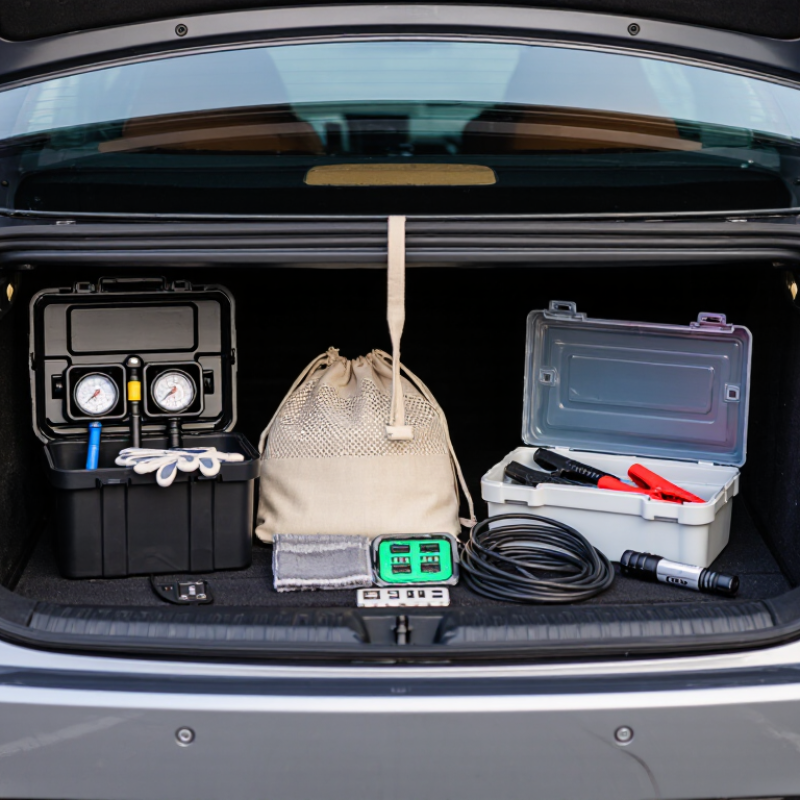
Car accessories need different storage conditions, so identify each item before choosing a box or shelf. Sort them by material and power source: rubber floor mats, fabric covers, metal tools, electronic inflators, and rechargeable jump starters all react differently to moisture, heat, and dust. Check labels for temperature limits, remove batteries when instructions allow, and keep cables loosely coiled. A damp trunk can leave corrosion on metal contacts. I have learned that “out of sight” is not always “stored safely.”
NHTSA’s TireWise guidance notes that tire pressure changes by about 1 psi for every 10°F change in temperature. That makes a tire gauge or inflator worth keeping accessible, clean, and protected from temperature swings. For seasonal items, inspect seams, connectors, and seals before packing them away. Store fabric accessories fully dry, and place small parts in labeled pouches so they do not disappear beneath larger gear. My own labels sometimes become vague over time; “car stuff” is not helpful.
Tips: Match the storage spot to the item. Use a cool, dry area for electronics, breathable bags for fabric, and a sealed organizer for small metal parts. Check rechargeable accessories every few months, following their manuals. Don’t assume every accessory can tolerate a hot garage.
Clean each car accessory before storing it, because dust and road grime can trap moisture against its surface. Use a soft cloth and mild soap where suitable; check care instructions for delicate or electronic items. Never immerse powered accessories. Wipe seams, clips, and textured areas, where dirt often remains. Let every piece air-dry fully in a ventilated spot, away from direct heat. Patience matters. If a towel leaves a damp edge, give it more time.
Tips: Place accessories on a clean towel and turn them once while drying. Check corners and fabric folds by touch. A surface can feel dry while padding underneath remains damp. Keep wet and clean items separate.
Before packing, inspect each item for moisture, grit, or residue. Small details count. Store only dry accessories in clean containers or compartments, and avoid sealing them in plastic while they are still warm or damp. For items used often, a quick wipe after each trip can prevent grime from building up. I sometimes rush this step, and later find dust stuck around a clip; a slower check would have helped. Recheck stored items after humid weather, especially fabric accessories and anything with foam padding.
Keep accessories completely dry before putting them away. For a damp-free storage area, the U.S. Environmental Protection Agency recommends keeping indoor relative humidity below 60%, ideally between 30% and 50%.
Humidity guidance: U.S. EPA, A Brief Guide to Mold, Moisture and Your Home. These are indoor humidity guidelines, not accessory-specific storage test results.
Choose containers by task, not appearance. A shallow lidded bin keeps bulbs, gloves, and cleaning cloths together, while a divided pouch prevents cables from tangling. Measure the trunk or under-seat space before buying an organizer; a tight fit can block access or slide during turns. Keep heavier items low and secured. NHTSA advises drivers to secure cargo and avoid loose objects that could move around the cabin.
Location matters as much as the container. A 2005 Pediatrics study by McLaren, Null, and Quinn found that parked-car interiors rose about 40°F in one hour; roughly 80% of the temperature increase occurred within 30 minutes. Heat can shorten the life of batteries, adhesives, and some plastic accessories. Store temperature-sensitive items indoors, especially during hot weather. Keep frequently used items in a small, clearly marked cabin pouch, but leave airbags and pedals unobstructed. Keep it simple. It is easy to over-organize, and a perfectly divided box is not useful if you cannot reach it safely. After a few weeks, remove items you have not used and rethink the layout.
Heat, moisture, dust, and theft can quietly shorten the life of car accessories. Store electronics, cables, and adhesive-backed items indoors when possible, away from windows, radiators, and damp garages. A hot car trunk may seem convenient, but summer temperatures can affect batteries, plastic parts, and sticky mounts. Keep items cool and dry.
Let accessories cool and dry before packing them. Wipe off road dust with a clean cloth, then place small parts in labeled, lidded containers. For fabric items, use a breathable bag rather than sealing in trapped moisture. A small moisture-absorbing packet can help, but check it regularly. It is easy to forget.
Keep valuable accessories out of sight, even in a locked vehicle. At home, use a closed cabinet or a storage box in a low-traffic area. Avoid stacking heavy objects on delicate parts, and keep cables loosely coiled to prevent damage. I have packed items away too quickly and later found grit inside the case. Not ideal. A brief inspection before storage takes little time, though it will not prevent every problem. Recheck stored items every few months, especially after humid weather or a long spell of heat.
Seasonal changes in China can affect stored car accessories through heat, humidity, dust, and cold. The China Meteorological Administration’s 2023 China Climate Bulletin reported a national average temperature of 10.7°C, the highest since records began in 1961. Regional conditions differ, so inspect items before each season rather than relying on one annual checklist. Check rubber wiper blades for cracks, cables for brittle insulation, and emergency lights for weak batteries. A damp trunk can also leave fabric organizers musty. Small details matter.
Tips: Group accessories by season, then label clear, sealed containers. Keep electronics and paper manuals away from damp areas; let wet items dry fully before storing. Move sun-sensitive items out of direct window light, and keep frequently used tools within easy reach. Recheck battery-powered devices before winter trips.
A simple inventory can prevent duplicate purchases and reveal damaged gear early. Note the inspection date on the container, and remove anything worn or no longer suitable. I sometimes overlook small adapters during a quick tidy-up, so a written list helps—but it is worth checking whether every item still belongs in the car. Avoid packing containers so tightly that cables bend sharply or soft items stay compressed for months.
Group items by material and power source. Keep fabric covers, metal tools, and electronic devices separate. Check labels for temperature limits.
Remove batteries only when the item’s instructions allow it. Store rechargeable accessories as their manuals recommend, and check them every few months.
Wipe suitable surfaces with a soft cloth and mild soap. Do not immerse powered accessories. Let everything air-dry fully.
Check seams, folds, and padded areas by touch. A dry surface can hide damp foam. Give it more time.
Use a shallow, lidded bin for gloves and cloths. Put cables and small parts in divided pouches so they stay easy to find.
Keep electronics and battery-powered items in a cool, dry indoor space. A parked car can heat up quickly, especially in warm weather.
Measure the storage space before choosing an organizer. Keep heavier items low and secured. Make sure nothing blocks pedals or airbags.
Check them every few months and after humid weather. Look for moisture, corrosion, damaged seals, or dusty fabric. I sometimes rush this check, and miss a corner.
How to store car accessories when not in use starts with identifying each item and considering its material, size, and storage needs. Clean and dry accessories thoroughly before putting them away to help prevent stains, odors, rust, or mildew. Choose suitable containers, compartmentalized organizers, or protective covers, and keep frequently used items easy to reach while placing seasonal accessories in a designated storage area.
Protect stored items from heat, moisture, dust, and theft by selecting a cool, dry, secure location away from direct sunlight. In China, changing seasonal temperatures and humidity can affect accessories, so inspect them periodically for damage or dampness. Reorganize your supplies as weather and driving needs change, and remove items that are no longer useful. A simple routine of cleaning, sorting, protecting, and checking can help keep car accessories in good condition and ready for the next trip.

Vivi Auto Accessories